What a UV flatbed printer can
actually make
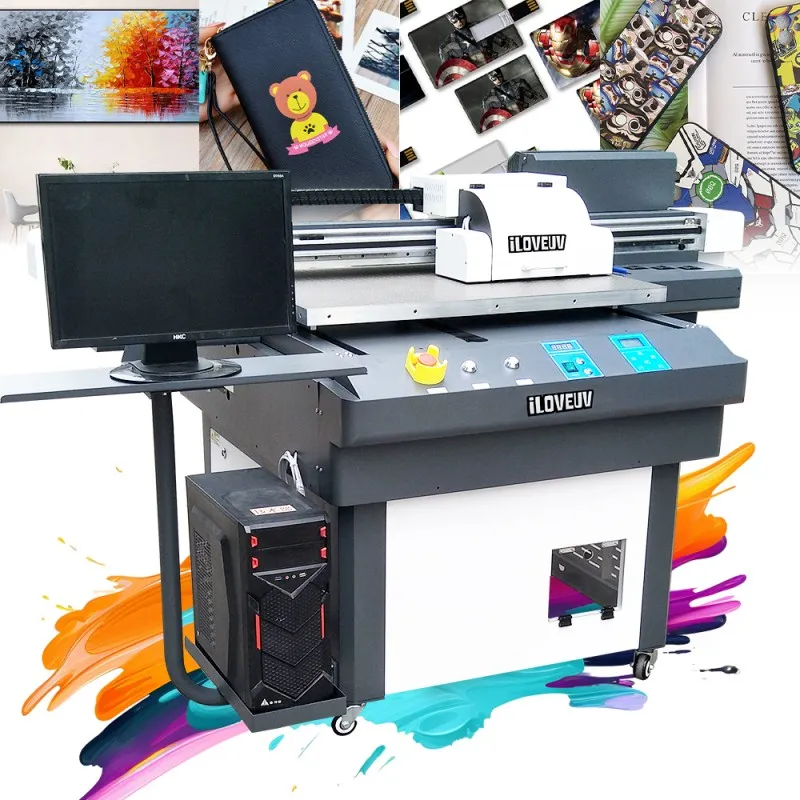
Buyers rarely ask me "what are the specs?". They ask "what jobs can I take with this?". That is the better question, so here is the list I walk through on a call — the products a UV flatbed actually earns money from, with no brochure language.
A UV flatbed holds an object flat on a vacuum bed while a moving carriage prints directly onto it. UV lamps cure the ink instantly, which is why it works on things that would never go through a roller: rigid boards, thick objects, awkward shapes. White ink and varnish are usually available as extra channels, and they are what make dark materials and textured effects possible.
The 12 products that pay the machine off
Signage and display — the everyday bread and butter
- Acrylic signs and wayfinding plates. Reception signs, door plates, desk name plates. White ink under the colour is what makes them readable on clear or dark acrylic.
- Metal nameplates and industrial labels. Serial plates, equipment badges, control-panel markings. Ask for an adhesion test on your actual alloy and coating.
- PVC / KT board display panels. Exhibition boards, retail posters, event signage. Cheap substrate, high volume, fast turnaround.
- Roll-up and pop-up display graphics on rigid panels. The rigid alternative when a client wants something that will not curl.
Interior and architectural work
- Ceramic tile and glass backsplash panels. Printed murals for kitchens, hotels and restaurants. Glass needs the right pre-treatment — confirm it before quoting.
- Decorative wall art and canvas panels. Photo-quality gradients are where digital printing genuinely beats screen printing.
- Printed wood and MDF panels. Menu boards, rustic retail signage, furniture inserts.
- Glass sliding-door and partition graphics. Often printed in reverse for second-surface mounting.
Small, high-margin objects
- Phone cases and small electronics accessories. The classic entry-level job for a 6090-class machine.
- Awards, medals and trophies. Sand-gold and relief effects are a strong upsell.
- Promotional gifts: keyrings, coasters, puzzles, badges. Short runs, frequent repeat orders.
- Printed odd-shape items — golf balls, pens, small boxes. This is where camera / visual positioning earns its keep.
Bed size decides who your customer is
The same technology behaves like three different businesses depending on the bed.
- 6090 (600 × 900 mm) — gifts, phone cases, samples, small signage. Suits a gift shop, a print-on-demand seller or a shop that wants a proofing machine alongside bigger equipment.
- 1313 class — mixed jobbing work, medium signage, small furniture panels.
- 2513 (2500 × 1300 mm) — full-size boards, architectural panels, furniture and glass. This is the size an ad-processing factory or a building-materials supplier buys, because it matches common sheet sizes with less waste.
I wrote a separate guide on choosing between 6090 and 2513, including the sheet-utilisation maths people usually forget.
What a flatbed will not do
Three limits worth saying out loud before you buy:
- Thickness and weight are bounded. Flatbeds handle a defined gantry clearance and bed load; very tall or very heavy objects need a different setup. Confirm the number for the exact model.
- Adhesion is material-specific. Some plastics, coated metals and glazed surfaces need pre-treatment, primer or a different ink set. "It prints on everything" is not a technical statement — always test on the customer's own material.
- Outdoor durability is a system property. Ink chemistry, substrate, coating and exposure all matter. Do not promise a service life you have not tested in the destination climate.
The useful sales question is not "is digital better than screen printing?" — it is "which orders are you currently turning away, and would this machine let you say yes?".
If you tell me the three products you want to make first, I can tell you which bed size and which ink configuration to shortlist, and which samples to demand from any supplier before you pay.