UV DTF crystal labels:
where they actually earn money
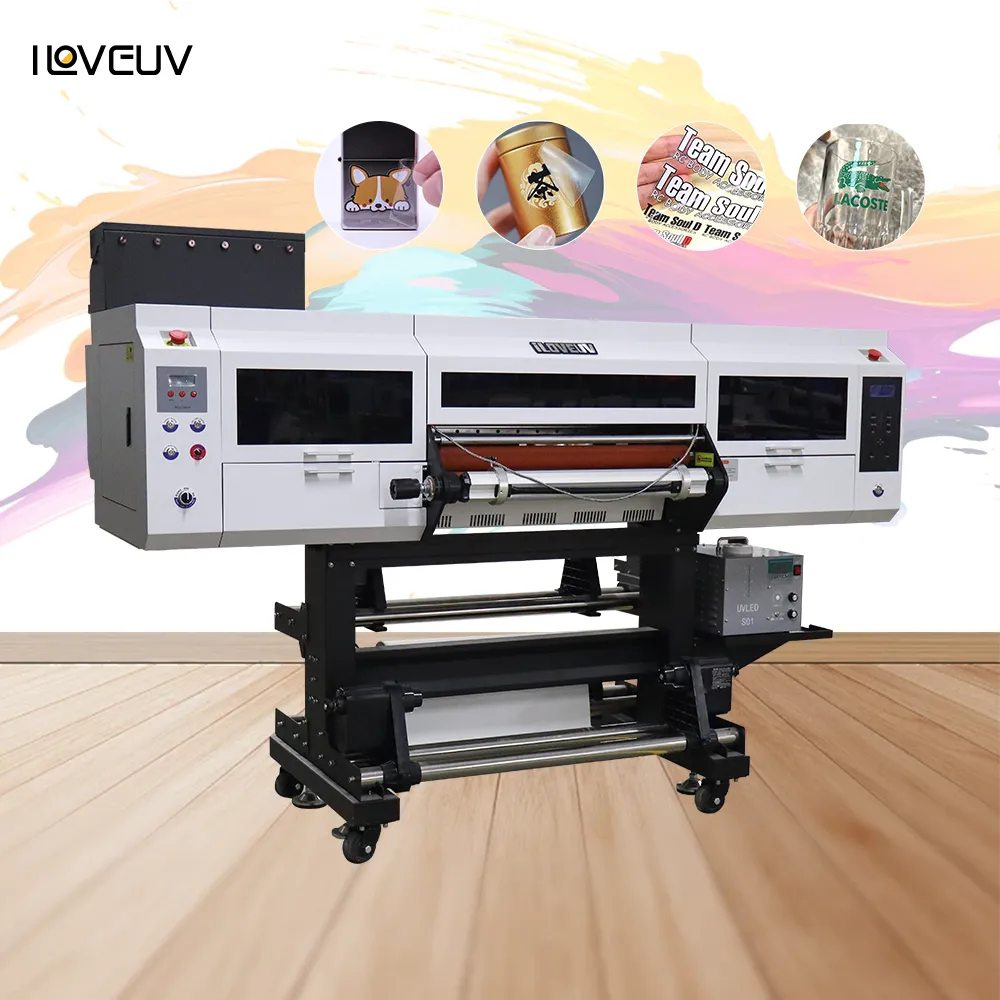
UV DTF — usually called crystal labels or UV transfer stickers — is the one product category that consistently surprises buyers who already own a flatbed. It is not a replacement for a flatbed. It solves a different problem: putting a full-colour, slightly raised, durable logo onto an object that is curved, small, or awkward to hold flat.
How the process works
The printer builds a stack on A film: adhesive, white ink, colour, then varnish. It is laminated onto B film, and the finished transfer is cut and stored. To apply it, you peel, place it on the object, press it down and remove the carrier. No heat press, no oven, no jig, no drying time. That "cold transfer" step is the whole reason this category took off with small shops and online sellers.
Because the print is made on film first, you can produce a batch of labels when the machine is free and apply them later. That decouples printing from finishing — useful when one person is running the shop.
Where the money is
- Drinkware: tumblers, glass cups, mugs, water bottles. The most common first order.
- Bottles and packaging: wine and spirits bottles, cosmetic containers, gift boxes, candle jars.
- Hard-goods branding: helmets, hard hats, appliance panels, tool cases, phone cases.
- Small promotional items: keyrings, badges, pens, magnet sets.
- Retail and event work: short-run branded merchandise where setting up a screen or a fixture is not worth it.
The pattern behind all of these: low quantity, high variety, curved or non-flat surface. That is exactly the segment where traditional printing is uneconomical.
UV DTF vs printing directly with a flatbed
Both use UV-curable ink. The difference is where the ink ends up and how the object is held.
- Direct flatbed — best for flat, rigid, larger items; no film consumable; higher throughput per piece on boards and panels.
- UV DTF — best for curved, cylindrical, very small or irregular items; no positioning fixture needed; easy to stock as finished transfers; but you buy A/B film continuously and each label has a handling step.
In practice many shops run both: the flatbed for signs and panels, the UV DTF unit for logos and merchandise. If you are choosing a first machine, the decision tree in this buying guide is the faster route.
Machine size and what it implies
A3 / desktop units suit a gift shop, an Etsy-type seller or a sampling setup. 30 cm and 60 cm roll machines suit a shop producing transfers in volume for other businesses. Wider machines also open up larger transfer applications such as TPU embroidery-effect transfers for garments, provided the film and process are matched. Ask any supplier to print one of your own designs on the exact film you would be buying.
What to test before you pay
- Adhesion on your real substrate — glass, coated metal, powder-coated bottles and some plastics behave very differently.
- Wash and abrasion resistance — a logo that looks perfect on day one can fail after two weeks of handling. Agree on the test method, not just a verbal promise.
- Film consumption and waste — the consumable is the ongoing cost, and it is easy to underestimate when a demo uses a pre-made roll.
- White ink stability — white settles. Ask how the machine circulates it and what the daily maintenance routine looks like.
One honest caveat: crystal labels are a premium decorative finish, not a general-purpose outdoor graphic. For large outdoor areas, vehicle wraps or lightbox film, a roll-based machine is the right tool — see my guide to lightboxes and soft film.