Lightboxes, soft film and
vehicle graphics
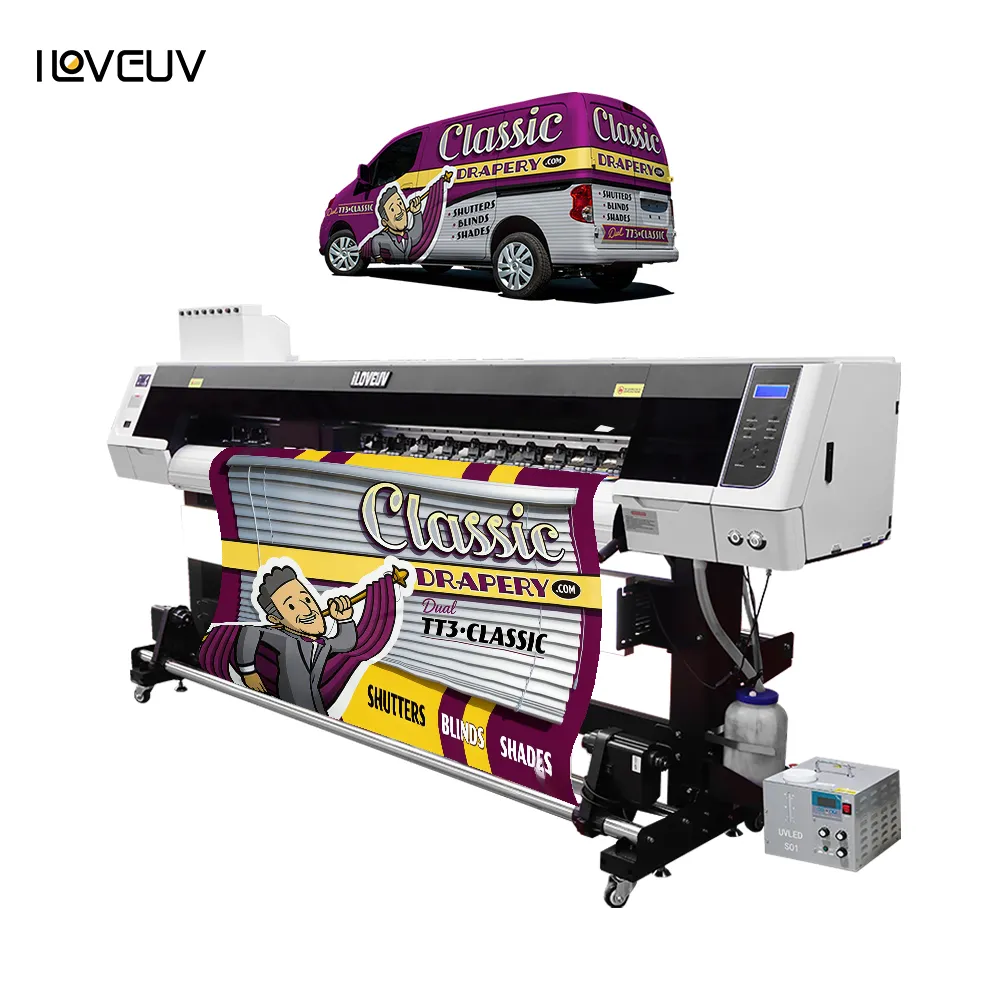
When a customer says "I want to make lightboxes", they are describing a finished product, not a machine. Two very different machines can produce it, and the right one depends on where the graphic will live, what it is printed on, and how many square metres you need per day. This guide is the short version of the conversation I have with ad-processing shops.
The two families of roll printing
Piezo wide-format (aqueous or eco-solvent). The entry-level workhorse of the advertising industry. Aqueous inks give excellent indoor photo quality on paper, photo paper and canvas; eco-solvent inks handle outdoor vinyl, vehicle wrap, one-way vision and banner material. Common widths are 1.6 m, 1.8 m and 3.2 m. Most shops already own one — it is the highest-volume, lowest-margin machine in the building.
UV roll-to-roll. UV lamps cure the ink as it prints, so the output is dry immediately, has little solvent odour, and can include white ink and varnish channels. That makes it suitable for backlit soft film, translucent graphics, wall coverings, leather and specialty media that a solvent machine cannot handle well. It is a step up in capability and in the jobs you can quote for.
Products, mapped to the machine
- Backlit soft film / ceiling lightboxes — UV roll-to-roll, often with white ink so the image reads correctly when lit from behind. Ask for a sample viewed both lit and unlit; colour shifts are common.
- Frontlit banner, knife-coated fabric, mesh — eco-solvent or UV, depending on outdoor exposure and finishing.
- Vehicle wraps, car graphics, one-way vision, floor graphics — typically eco-solvent on cast or calendared vinyl, then laminated. Conformability and the laminate matter more than raw resolution.
- Seamless wall murals and personalised wallpaper — UV or aqueous, with the substrate chosen for the interior specification.
- Window / super-clear stickers, transparent hanging banners — this is where white ink earns its place: a colour image on clear film is invisible without a white underbase.
- Flag and banner fabric — a separate category (dye-sublimation direct or transfer) if you need double-sided penetration; a UV roll machine is not automatically the answer.
Three questions that settle most purchases
- Indoor or outdoor? Indoor aqueous work is about colour fineness; outdoor work is about weatherability, UV resistance and lamination. Outdoor media and laminates cost more, and the ink system must match the promised service life. Never quote a durability number you have not verified for the destination climate.
- Do you need white ink or varnish? If you want transparent media, backlit film, or spot-gloss effects, a machine without those channels cannot produce the job — no amount of profiling fixes that.
- What is your actual daily square metreage and maximum width? Buy width for the jobs you have, not the ones you imagine. A 3.2 m machine in a shop that prints 1.2 m panels is mostly idle floor space.
Finishing is half the process
Lamination, cutting, heat-knife edging, eyelets and sewing are where most shops lose time. When comparing machines, ask for the full line-up: printer, dryer / curing, laminator and cutter. A fast printer feeding a slow finishing table just moves the bottleneck.
Also ask to run a sample through your own finishing step. Some UV outputs crack or scuff under cold lamination, and some backlit films show banding only after installation. These are cheap to discover on a sample and expensive to discover on a 200 m² order.
Do not buy a machine to replace the one you have. Buy it for the quotes you currently decline — backlit film, clear-film graphics, textured finishes, same-day delivery without drying time.
For the wider logic behind these choices, the three dividing lines of print production explains how substrate, environment and process interact. And if you are comparing roll machines against flatbeds and UV DTF, start with the three-way buying guide.